

Plumes and Backgrounds
How to select the right background for accurate opacity readings
Excerpt from Online Visible Emissions Course · Return to course summary »
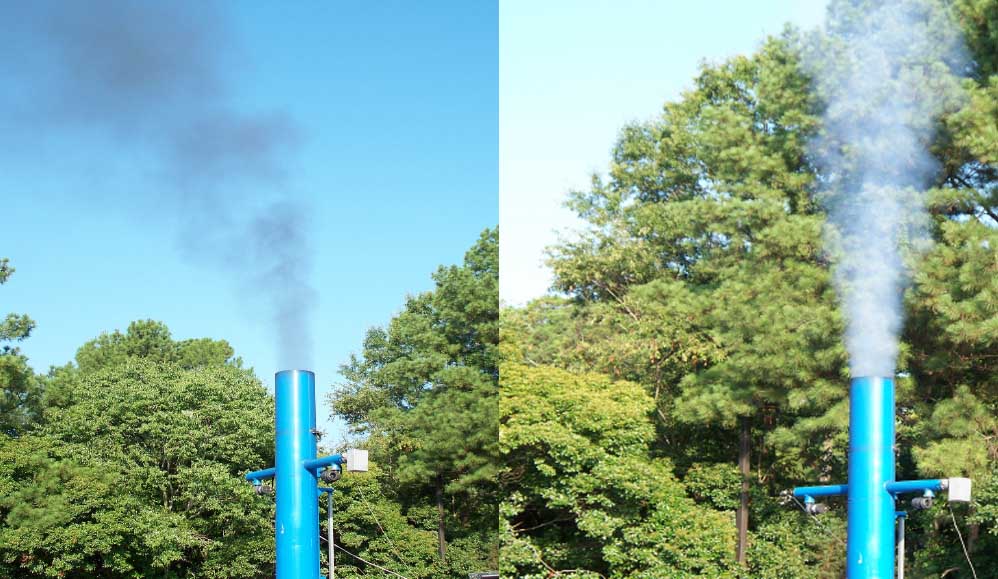
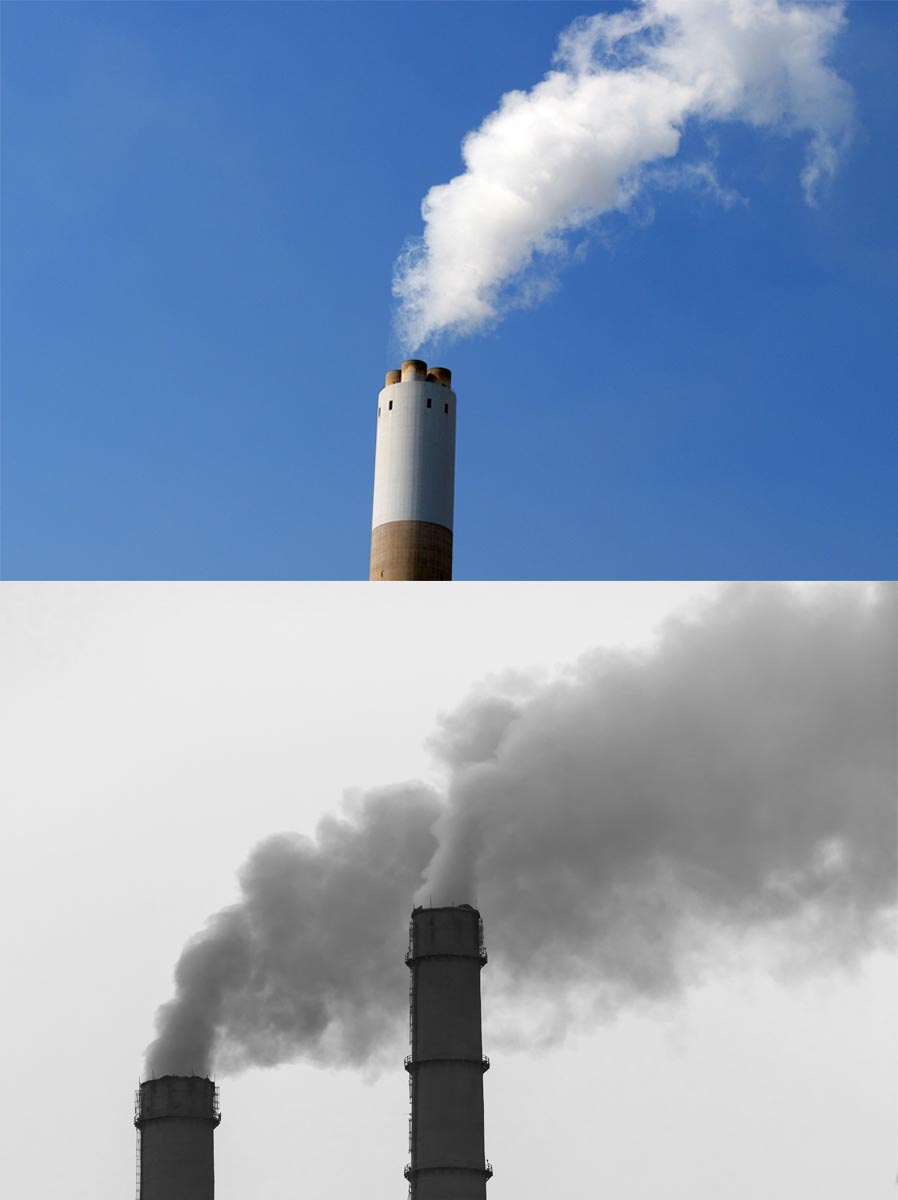
Smoke plumes and backgrounds
Visible emissions occur in many color shades depending on the particles that make up the smoke. For opacity reading purposes, there are two categories of smoke: black and white. Black smoke absorbs light; white smoke refracts (scatters) and reflects light.
During a smoke school field certification, students read 25 white plumes and 25 black plumes created by a smoke generator.
It is important to choose a background for the reading that has a high contrast to the plume, in both luminosity (brightness) and color contrast. In the images provided:
- The black smoke is read against a light blue sky (high luminous contrast).
- The white smoke is being read against a green background. Green is the color most visible to the human eye and an ideal background for white smoke.
NOTE: Water vapor plumes are not considered emissions and should be excluded from observation data when performing a reading. They typically appear very white and billowy, transitioning to thin and wispy at the point of dissipation. This will be discussed further in upcoming sections.
Selecting a background
The right background behind the plume is an important element in performing an accurate visible emissions observation. The most important part of selecting a background for an opacity reading is to ensure there is a high contrast between the plume and the background. As discussed, the best background for white smoke is green foliage; for black smoke, a blue sky.
There are two elements to account for in opacity readings: luminosity (brightness) and color contrast.
An example of high luminous contrast is a black plume against a light sky. Two objects of the same color can show up against each other because of differences in lighting levels or light direction.
The accuracy of opacity readings is defined by the bias of a reading:
Negative bias
Negative bias in an opacity reading means that the opacity reading is lower than the actual opacity. A negative bias is typically caused by insufficient contrast between the plume and background. On days when the sun is not out and luminosity is low, a negative bias is more likely to occur.
Positive bias
Positive bias means that the opacity reading is higher than the actual opacity. A positive bias is typically caused by high contrast between the plume and background. On sunny days when luminosity is high, a positive bias is more likely to occur.