

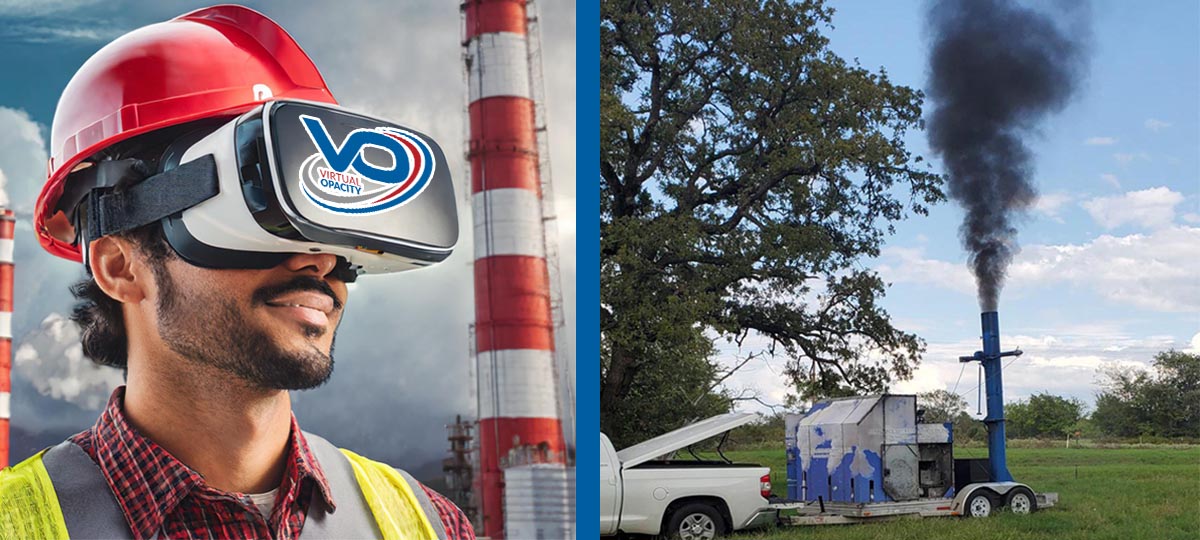
For those responsible for monitoring visible emissions at their facilities, EPA Method 9 certification through smoke school is mandatory. This article explains what smoke school requires and what individuals need to do to pass.
Who Needs Smoke School Certification?
EPA Method 9 certification is required for those who:
- Conduct opacity readings for regulatory compliance
- Monitor visible emissions from stationary or fugitive sources
- Work at facilities required to document opacity levels
- Serve as the designated observer for the facility's air permit
Even when individuals are not currently conducting observations, many facilities require backup certified observers to ensure continuous compliance coverage.
Industries That Need Method 9 Observers
The need for Method 9 certification spans numerous industries where combustion or industrial processes generate visible emissions:
Power Generation - Coal, natural gas, and biomass power plants must monitor stack emissions to comply with opacity limits in their Title V permits. Most facilities maintain multiple certified observers to ensure 24/7 coverage.
Manufacturing - Cement plants, steel mills, glass manufacturers, and chemical plants frequently have opacity monitoring requirements tied to their air quality permits and operating conditions.
Waste Management - Municipal solid waste incinerators, medical waste incinerators, and hazardous waste combustors must document opacity levels as part of their continuous compliance obligations.
Asphalt and Concrete - Asphalt plants and concrete batch plants often face opacity limits for their drying operations, kilns, and material handling processes.
Wood Products - Lumber mills, plywood manufacturing, and wood-fired boilers require certified observers for various emission points including kilns, dryers, and boilers.
Petroleum Refining - Refineries monitor opacity from flares, process heaters, catalytic crackers, and other emission sources under strict permit conditions.
Food Processing - Large-scale food manufacturing facilities with boilers, dryers, or roasters may need certified observers depending on their air permits and fuel sources.
Prerequisites for Attending Smoke School
There are no formal prerequisites for smoke school. However, participants do need:
- Normal or corrected vision (glasses or contacts)
- Ability to distinguish between different shades of gray
- Basic understanding of industrial processes (helpful but not required)
The Smoke School Curriculum
EPA Method 9 training consists of two main components: visible emissions lecture course and field testing.
Lecture Course
The lecture course (some smoke schools still use in-person classroom training) covers:
- What opacity is and how it's measured
- The history of air quality compliance
- EPA Method 9 procedures and protocols
- Proper observation techniques
- Weather and lighting considerations
- Documentation and recordkeeping requirements
Field Testing
The field portion is where Method 9 certification is earned. Participants must:
- Read 50 plumes of varying opacity levels: 25 white smoke, 25 black smoke
- Not have an error that exceeds 15 percent opacity on any one reading
- Have an average error that does not exceed 7.5 percent opacity in each color category
How Long Does Method 9 Certification Last?
Smoke school certification is valid for 6 months from the date of certificate issuance. After 6 months, observers must recertify to continue conducting opacity readings. Recertification follows the same process as initial certification.
Ready to Get Certified?
Whether choosing virtual or in-person training, individuals receive the same certification needed for regulatory compliance. Learn about what you should look for in a smoke school in the article What is EPA Method 9?