

Understanding State Implementation Plans and Facility Compliance
Federal air quality standards apply across the country, but facility compliance requirements are not always identical from 1 state to another. For facilities operating across multiple states, those differences often come back to State Implementation Plans, or SIPs.
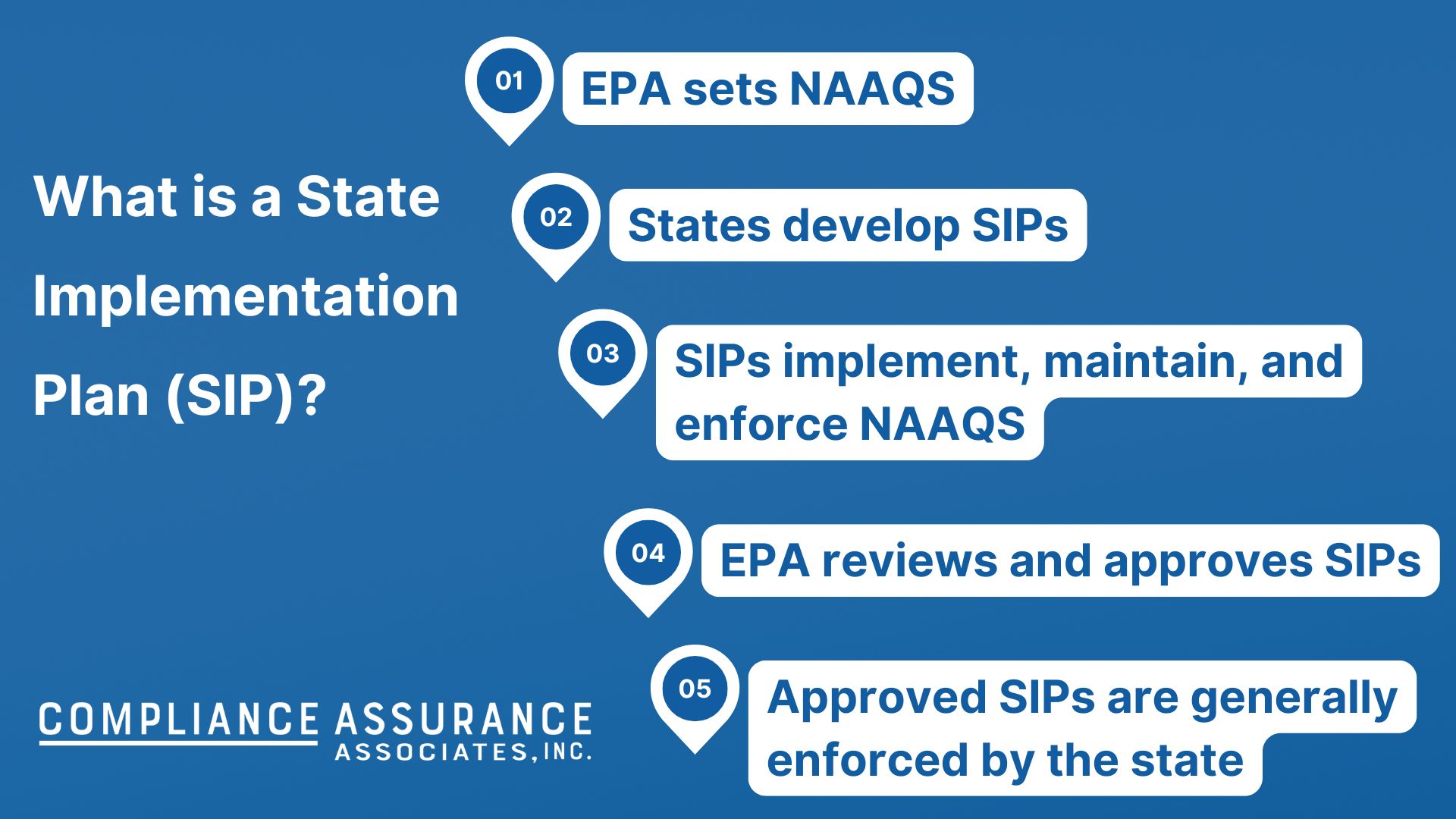
SIPs are 1 of the main ways the Clean Air Act is implemented at the state level. While the EPA establishes national air quality standards, states are responsible for developing plans that show how those standards will be achieved and maintained locally. Once approved by the EPA, SIP requirements become federally enforceable.
For facilities, SIPs matter because they frequently shape the permitting, monitoring, recordkeeping, and emissions requirements that apply to day-to-day operations.
For a deeper breakdown of facility-specific permitting requirements, see the previous Compliance Assurance Associates, Inc. (CAA) post on Title V permits.
What Is a SIP?
A State Implementation Plan is a state-developed regulatory framework that explains how the state will comply with the National Ambient Air Quality Standards (NAAQS) established under the Clean Air Act.
States draft SIPs and submit them to the EPA for approval. If approved, the SIP becomes federally enforceable.
SIPs are not static documents. They are updated over time as air quality conditions change, new standards are introduced, or states revise their regulatory approach.
From a facility perspective, SIPs often include:
- State-specific emissions limits
- Monitoring and testing requirements
- Enforcement procedures
- Air permitting frameworks
- Requirements for nonattainment areas
- Source-specific rules or consent decrees
Importantly, SIP provisions can sometimes be more stringent than federal minimum requirements.
As referenced in CAA training materials:
“SIP regulations are at a state level. SIPs are state-adopted measures with additional regulations to the NSPS or source-specific requirements, including orders and consent decrees. SIPs may contain procedures that vary from EPA Method 9 or requirements not documented in the Title V permit.”
That last point is important. Facilities sometimes assume a permit captures every applicable requirement, but SIP obligations may extend beyond what is immediately visible in permit language alone.
Why Do SIPs Matter for Facilities?
SIPs directly influence how facilities are regulated within a state.
For example, SIP provisions may establish:
- Additional opacity requirements
- State-specific monitoring procedures
- Reporting obligations
- Emission limitations beyond federal baselines
- Enhanced requirements in nonattainment areas
These differences become especially important for companies operating across multiple states, where similar facilities may face different compliance obligations depending on the applicable SIP.
SIPs are also revised regularly. A state may adopt new requirements or modify existing provisions during a current permit cycle, potentially changing compliance expectations before permit renewal occurs.
Because of this, facilities should monitor SIP revisions proactively rather than relying solely on permit renewals to identify regulatory changes.
How Do SIPs Affect Nonattainment Areas?
When an area does not meet a federal air quality standard for a pollutant, the EPA designates it as a nonattainment area. This triggers additional SIP requirements intended to bring the area back into compliance.
For affected facilities, nonattainment status can lead to:
- Stricter emissions limitations
- Additional permitting requirements
- Enhanced control technology requirements
- Increased monitoring or reporting obligations
These designations are pollutant-specific, meaning an area may be in nonattainment for 1 pollutant while remaining in attainment for others.
Facilities located in or near nonattainment areas should pay close attention to SIP revisions and permitting impacts tied to those classifications.
How Can Facilities Stay Ahead of SIP Requirements?
For many operators, SIP compliance challenges stem from visibility rather than intent. Requirements may be spread across state regulations, permitting language, source-specific rules, and EPA-approved SIP revisions.
Practical steps facilities can take include:
- Identifying which pollutants and SIP provisions apply to their operations
- Confirming whether facilities are located in attainment or nonattainment areas
- Monitoring state agency SIP revisions and public comment periods
- Reviewing whether operational requirements extend beyond permit language alone
- Evaluating compliance impacts when operating in multiple states
Understanding SIPs provides important context for how state and federal air regulations work together and why requirements can vary significantly by location.
Key Takeaways
- SIPs are state-developed plans for implementing Clean Air Act air quality standards
- Once approved by the EPA, SIPs become federally enforceable
- SIP requirements can be more stringent than federal minimum standards
- Nonattainment areas often trigger additional facility obligations
- SIP revisions can affect facilities before permit renewals occur
- Monitoring state-level SIP activity is an important part of proactive compliance management
Questions About SIP Requirements?
SIP requirements can become especially complex for facilities operating across multiple jurisdictions or in nonattainment areas. CAA works with facilities to better understand applicable requirements, regulatory changes, and compliance obligations tied to state and federal air quality programs.
For questions about visible emissions compliance, smoke school training, or how Method 9 requirements may appear in state-level programs, contact CAA by email or phone.
Compliance Assurance Associates, Inc. (CAA) is a nationally recognized provider of smoke school training and opacity certification, helping facilities navigate visible emissions requirements embedded in Title V permits, State Implementation Plans, and other air compliance programs.